Childhood Apraxia of Speech: Diagnosis and Therapy Options
Why Early Attention Matters
Childhood Apraxia of Speech (CAS) is a neurological motor‑speech disorder in which the brain has difficulty planning and sequencing the oral movements needed for clear speech, despite normal muscle strength. Because speech is the primary vehicle for language, the inconsistent errors, disrupted prosody, and long pauses typical of CAS can limit a child’s ability to be understood, participate in classroom activities, and acquire literacy skills. Early identification—ideally before age five—allows intensive, evidence‑based therapy to harness neural plasticity, improve intelligibility, and support overall academic and social development.
Section 6 – Specific Treatment Techniques, including DTTC …
The Neurological Foundations and Prevalence of CAS
Childhood Apraxia of Speech (CAS) is a neurological speech‑sound disorder that stems from disrupted planning and sequencing of speech movements in the brain. The core neural network involved includes the left inferior frontal gyrus (Broca’s area) and adjacent frontal regions, as well as the left parietal and temporal lobes and the white‑matter tracts that link them. Damage or dysregulation of this left‑hemisphere speech‑motor pathway prevents the brain from accurately programming the oral‑motor patterns needed for clear speech, even though the muscles themselves are strong and hearing is normal. Because the impairment originates in central motor planning, CAS is classified as a neurological disorder in the DSM‑5 (listed under “verbal dyspraxia”).
Epidemiologically, CAS is rare. Population studies estimate a prevalence of about 1 to–22 children 1 000 children, % roughly in surgical totals children.0 subset far less common than typical articulation or phonological delays, yet its impact on intelligibility and language development can be profound. Early identification—ideally before age five—allows intensive, evidence‑based speech‑language therapy to harness neural plasticity and improve outcomes.
In summary, CAS reflects a focal disruption of the left frontal‑parietal‑temporal speech‑motor network, is recognized as a neurological speech disorder, and affects fewer than one percent of children, underscoring the need for specialized, early intervention.
Spotting the Signs Early
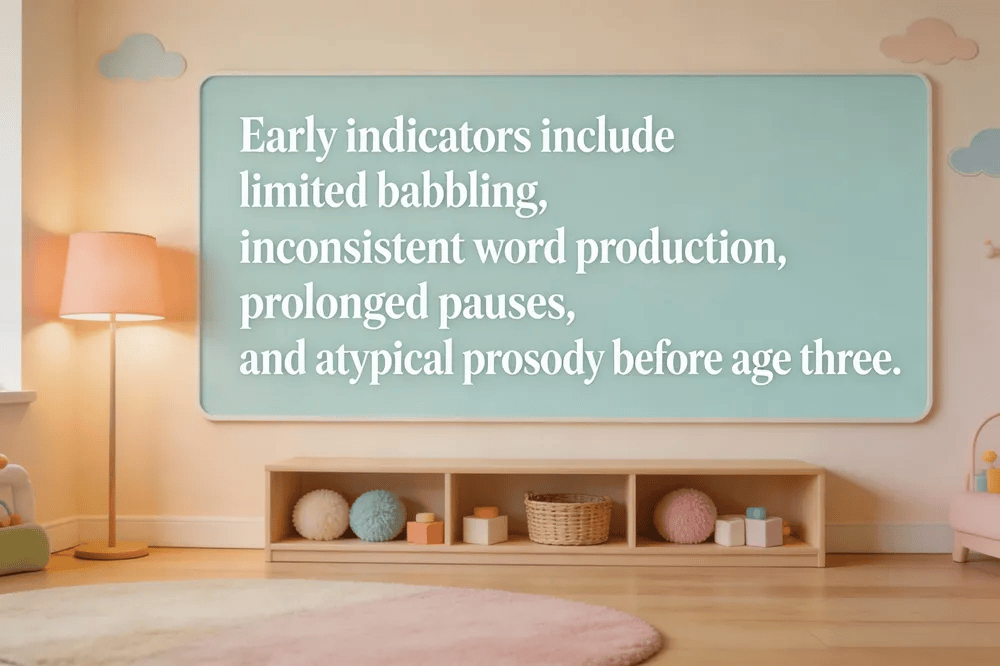
Early signs of Childhood Apraxia of Speech (CAS) often emerge before age three. Parents may notice limited or absent babbling, a very small repertoire of consonant‑vowel combinations, and delayed first words. When the child does speak, productions are inconsistent—saying the same word differently each time—accompanied by long pauses between sounds, a choppy rhythm, and equal stress on every syllable. Imitating simple words is difficult, vowel and consonant distortions are common, and a noticeable gap exists between the child’s language comprehension and expressive ability. Related “soft” signs can include oral‑motor difficulty with purposeful movements (e.g., smiling, puckering) and feeding challenges.
CAS can generally be diagnosed between two and three years of age, though early warning signs may appear as early as 18 months. A comprehensive evaluation by a licensed speech‑language pathologist includes a detailed case history, oral‑motor examination, hearing screening, and speech‑sample analysis with standardized tests. Early identification enables the start of intensive, evidence‑based therapy during the critical window of speech growth.
Key markers that differentiate CAS from other speech disorders are: (1) highly variable, inconsistent errors on repeated attempts; (2) difficulty planning and sequencing sounds, seen as groping movements and disrupted transitions; (3) atypical prosody with inappropriate stress, rhythm, or intonation; (4) the ability to produce many sounds correctly in isolation but frequent failure to combine them accurately in connected speech; and (5) lengthened pauses or abnormal timing between sounds that are not typical of pure articulation disorders.
The Diagnostic Journey and the Role of the SLP
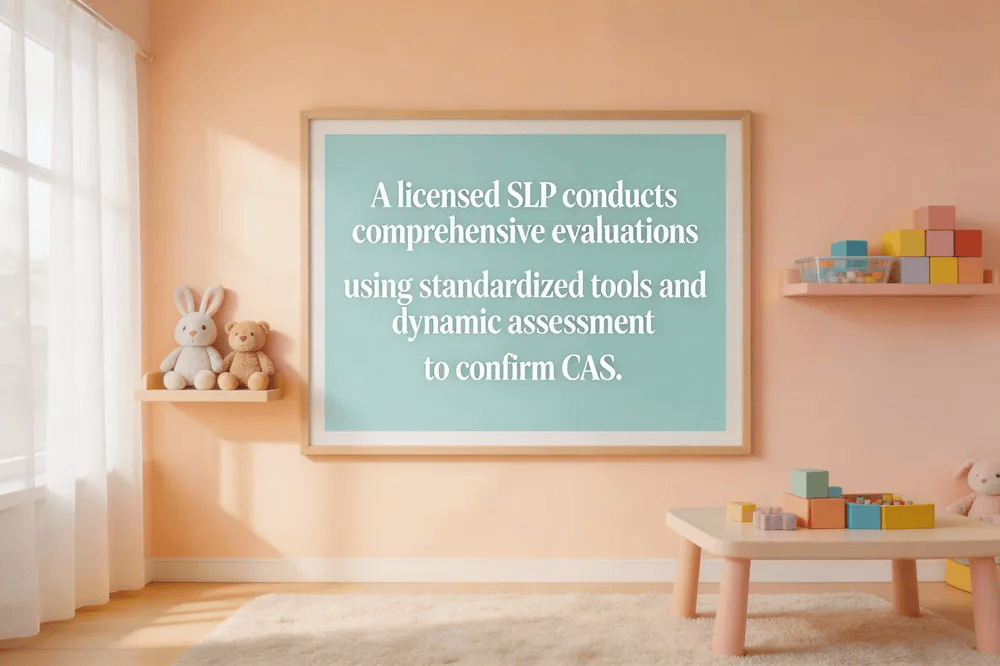
A licensed speech‑language pathologist (SLP) is the professional qualified to diagnose childhood apraxia of speech (CAS). The diagnostic process begins with a comprehensive evaluation that gathers a detailed developmental and medical history, conducts a hearing screening, and examines oral‑motor structures such as the lips, tongue, jaw, and palate. The SLP then observes speech production across a range of tasks—play‑based naming, picture description, and repetitive syllable sequences like “pa‑ta‑ka”—to detect the hallmark features of CAS: inconsistent errors, lengthened or disrupted transitions, and inappropriate prosody.
Standardized assessment tools (e.g., GFTA‑2, DEAP, Kaufman Speech Praxis Test for Children) and dynamic‑assessment protocols are used to document error patterns and to differentiate CAS from phonological or articulatory disorders. Dynamic evaluation, which provides graded cues and measures cue‑dependency, helps confirm the motor‑planning nature of the difficulty.
Professional qualifications are essential; the SLP must hold a master’s degree in speech‑language pathology, be state‑licensed, and often possess specialty certifications (e.g., CCC‑SLP) that demonstrate advanced training in motor speech disorders. Collaboration with pediatricians, audiologists, and occupational therapists ensures a multidisciplinary approach.
Can a speech‑language pathologist diagnose childhood apraxia of speech? Yes. A speech‑language pathologist (SLP) is qualified to diagnose childhood apraxia of speech (CAS) through a comprehensive clinical evaluation. The SLP conducts an oral‑motor assessment, analyzes speech samples, and administers standardized screening tools to determine whether the child meets the diagnostic criteria for CAS. Because there is no medical test for the disorder, the SLP’s expertise in speech motor planning and coordination is essential for distinguishing CAS from other speech‑language conditions. The evaluation also includes gathering health history and ruling out factors such as muscle weakness or neurological issues. In some cases, the SLP may collaborate with physicians or other specialists to ensure a complete, individualized diagnosis.How is childhood apraxia of speech diagnosed? A licensed speech‑language pathologist conducts a comprehensive evaluation that includes a detailed developmental and medical history, a hearing screening, and an oral‑motor exam of the lips, tongue, jaw, and palate. The SLP observes the child’s speech production during play, picture‑naming, and repeated‑syllable tasks (e.g., “pa‑ta‑ka”) to identify the three core features of CAS: inconsistent errors, lengthened or disrupted transitions, and abnormal prosody. Standardized tools such as the GFTA‑2, POEMS, and dynamic‑assessment protocols are often used to document the pattern of errors and to differentiate CAS from other speech‑sound disorders. The clinician also assesses language comprehension, vocabulary, and grammar to ensure the problem is motor‑based rather than linguistic. Diagnosis is made when the overall pattern of findings aligns with the established CAS criteria, sometimes confirmed by a trial of apraxia‑targeted therapy to see how the child responds to specific cues.
Evidence‑Based Therapeutic Strategies
Intensive motor‑learning programs are the cornerstone of effective treatment for Childhood Apraxia of Speech (CAS). Evidence‑based approaches such as Dynamic Temporal and Tactile Cueing (DTTC), Rapid Syllable Transition (ReST), and NDP‑3 emphasize high‑frequency, multisensory practice of a small, carefully chosen set of target words. Therapy is typically delivered 3‑5 times per week, with sessions lasting 30‑45 minutes, and includes visual modeling, tactile prompts, auditory feedback, and rhythmic pacing to support speech planning. Cueing techniques progress from dense (e.g., mouth‑watching, slow modeling, gentle touch) to faded prompts as the child gains accuracy. Home practice—short (≈5‑minute) sessions twice daily reinforces skills and promotes generalization.
What is the best treatment approach for childhood apraxia of speech? The most effective approach combines intensive, cue‑rich motor‑learning programs (DTTC, ReST, NDP‑3) delivered 3‑5 times weekly, with individualized goals, frequent repetition, and parent‑coached home practice.What treatment options are available for childhood apraxia of speech (CAS)? Options include DTTC, ReST, Integrated Phonological Awareness Intervention, and NDP‑3, all employing repetitive practice, multisensory cues, variable practice blocks, and prosody training.What are some effective speech‑language exercises for apraxia?
Effective exercises involve a “sound of the day” practiced in isolation then in simple words, reading short books that highlight the target sound, animal‑sound games with puppets, rapid flash‑card drills of syllable chains (e.g., “pa‑ba‑ta”), and rhythmic tapping or clapping while speaking to scaffold timing.
Home Practice and Family Empowerment

Parents are the cornerstone of successful therapy for Childhood Apraxia of Speech (CAS). Short, structured drills—usually 5‑10 minutes twice a day—focus on a small set of target sounds or words. Using visual cues such as picture cards or mirror‑watching, auditory cues like exaggerated modeling, and tactile cues (gentle touch to the jaw, lips, or a light tap on the face) helps the child form the correct motor plan. Activities can be woven into everyday routines: saying “Hi, Mom” at the door, counting objects while chanting syllables, or singing a simple song with a steady beat to reinforce prosody and timing.
Research notes that Vitamin B12 deficiency can contribute to speech and language delays; correcting a documented deficiency under pediatric guidance may support overall neurological development, but it does not replace intensive speech therapy.
Parents can empower their child by creating a low‑pressure, encouraging environment, using positive reinforcement, and coordinating with the speech‑language pathologist to align home drills with clinic goals.
FAQ: • Which vitamin is linked to speech delay? Vitamin B12 deficiency has been associated with speech and language delays. • How can parents help at home? Practice brief, cue‑rich drills daily, incorporate rhythmic activities, and use tactile prompts while staying consistent with the therapist’s plan. • Is apraxia linked to autism? Apraxia is a distinct motor‑planning disorder but often co‑occurs with autism; screening for both conditions is essential.
Oklahoma City Resources for CAS and Related Services
Families in Oklahoma City can obtain pediatric speech‑language therapy for Childhood Apraxia of Speech (CAS) at Pediatric Communication Solutions (9900 Broadway Extension Ste 200, OKC; (405) 438‑0090; www.pcs‑ok.com). The clinic’s licensed SLPs use evidence‑based motor‑learning approaches such as DTTC, PROMPT, and paced learning, and they collaborate with medical specialists for comprehensive care.
To locate a qualified SLP, start by reviewing therapist bios on the Pediatric Communication Solutions website for CAS expertise, then use the ASHA Find a Professional tool with “Apraxia of Speech” filtered for Oklahoma City. Verify credentials—SLP license, pediatric motor‑speech training, and certifications in PROMPT or DTTC—and confirm insurance compatibility before scheduling an evaluation.
Pediatric occupational therapy is available through Oklahoma Pediatric Therapy Center and Kids in Motion Mobile Pediatric Therapy, offering in‑clinic and home‑based services for fine‑motor, sensory, and feeding challenges.
Other local pediatric speech and language centers include Horizons Pediatric Therapy and Quest Pediatric Therapy, both providing individualized, family‑centered programs.
Adult speech‑therapy services are offered at SSM Health St. Anthony Hospital and OU Health outpatient rehab clinics, addressing aphasia, dysphagia, voice, and cognitive‑linguistic needs. For adult apraxia, clinicians employ intensive motor‑learning methods (DTTC, ReST), articulatory drills, and AAC supports, with sessions typically 2‑3 times per week.
Integrating Care: Co‑Occurring Conditions and Multidisciplinary Collaboration
Children with Childhood Apraxia of Speech (CAS) often present additional challenges that require coordinated care. Language delays are among the most common comorbidities; many children with CAS have expressive‑language deficits that benefit from parallel language‑therapy interventions. Research and clinical reports also note a high overlap with Autism Spectrum Disorder (ASD). While CAS is a distinct motor‑planning disorder, up to 60‑70 % of children with ASD exhibit speech‑motor planning difficulties consistent with CAS. Consequently, clinicians screen for both conditions to ensure that treatment plan addresses speech‑motor planning, language development, and the social‑communication needs of autism. When oral‑motor or feeding problems are present, speech‑language pathologists collaborate with occupational and physical therapists to integrate oral‑motor exercises, sensory cueing, and feeding therapy into the child’s overall program. Augmentative and Alternative Communication (AAC) systems—such as picture boards, sign language, or speech‑generating devices—are introduced early when speech intelligibility is limited, reducing frustration and supporting language growth while oral skills are built. A multidisciplinary team that includes pediatricians, audiologists, educators, and SLPs ensures that evaluation, intensive evidence‑based therapy (e.g., DTTC, PROMPT, ReST), and home‑practice strategies are tailored to each child’s unique profile, promoting the best possible communication outcomes.
Next Steps for Families and Professionals
A licensed speech‑language pathologist confirms CAS through a comprehensive evaluation that reviews medical history, hearing, oral‑motor structures, and speech‑production patterns such as inconsistent errors, disrupted prosody, and difficulty sequencing sounds. Evidence‑based therapy—intensive, multisensory practice of syllables, words and phrases using visual, auditory and tactile cues—should begin as early as possible, ideally 3‑5 sessions per week with daily home practice. Early, high‑frequency intervention maximizes neural plasticity and improves intelligibility. For personalized assessment and treatment, contact Pediatric Communication Solutions in Oklahoma City at (405) 555‑1234 or visit www.pcsokc.com for your child’s speech journey.