Cleft Palate Speech Therapy: Techniques and Outcomes
Introduction
Cleft palate affects roughly 1 in 700–1,000 live births in the United States, making speech disorders a frequent secondary concern for these children. The most common speech‑related problem is velopharyngeal dysfunction (VPD), which can be classified into three types: velopharyngeal insufficiency (a structural gap usually linked to a cleft palate), velopharyngeal incompetence (a neuro‑physiological disorder of the velum), and velopharyngeal mislearning (learned compensatory articulation errors). Because the underlying anatomy may limit oral pressure, a multidisciplinary team—surgeons, orthodontists, audiologists, and licensed speech‑language pathologists—collaborates to evaluate and treat the child. Early intervention, ideally before age three, improves language quantity, reduces compensatory habits, and sets the stage for normal speech and resonance outcomes.
Speech Therapy for Cleft Related Speech Disorders
Foundations of Cleft Palate Speech Therapy
Therapy techniques for cleft palate speech and related Disorders pdf Speech‑language pathologists (SLPs) focus on correct oral placement and building intra‑oral pressure through motor‑phonetic drills. Nasal occlusion (nose plug.pdf)) blocks unwanted airflow while the child practices target consonants, allowing feel feedback. After velopharyngeal surgery, auditory feedback tools—such as the Oral & Nasal Listener (ONL).pdf) or straw—help the child learn to use the repaired valve and reduce hypernasality. Compensatory articulations (e.g., glottal stops, pharyngeal productions) are systematically replaced with proper oral placements, progressing only after 100 % mastery in isolation.Cleft palate speech therapy techniques Therapy emphasizes multisensory cues (visual, tactile, auditory) paired with phonetic placement cues. Repetitive syllable drills (e.g., /pa/, /tee/) and imitation of “snake” sounds provide real‑time auditory feedback on oral airflow. Therapy moves from isolated phonemes to consonant‑vowel combos once mastery is demonstrated. Throughout, SLPs coordinate with the interdisciplinary cleft team to monitor structural changes and adjust goals.Speech therapy techniques for cleft lip and palate
Articulation therapy targets mis‑produced sounds such as glottal stops and nasal fricatives. Prior to repair, a nose plug is used to generate oral pressure; post‑repair, auditory feedback (Oral & Nasal Listener (ONL), straw and repetitive drills reinforce proper velopharyngeal closure. Visual‑tactile prompts and phonological approaches replace compensatory patterns, while parent‑guided home practice ensures carry‑over into daily communication.
Comprehensive Assessment and Speech Samples
A thorough cleft‑palate speech assessment begins with a detailed case history—including family, medical, surgical, developmental, language exposure, feeding, and hearing information—followed by audiology screening to detect middle‑ear dysfunction. The oral‑mechanism exam observes lip, tongue, jaw, and velum structure and movement. Perceptual evaluation focuses on articulation, hypernasality, and nasal emission, while instrumental measures such as nasometry, video‑nasopharyngoscopy, or videofluoroscopy provide objective data on velopharyngeal function. Standardized speech samples, like the “Zoo Passage” or high‑pressure consonant sentences, are recorded and compared with normed databases to gauge resonance shift and oral‑motor performance. These steps reveal characteristic speech patterns—hypernasal resonance, weak pressure‑dependent consonants, and compensatory articulations (e.g., glottal stops, pharyngeal fricatives)—and guide individualized therapy, surgical referral, and ongoing monitoring for optimal communication outcomes.
Early Intervention and Pre‑Surgical Strategies

Babbling before palate repair is limited to nasal sounds (m, n, w, y) and low‑pressure consonants because the velopharyngeal valve cannot generate oral air pressure. Parents can boost oral sound development by modeling clear phonemes, engaging in vocal play, and using functional vocabulary that incorporates producible sounds (e.g., “mommy,” “more”). Nasal occlusion—via a nose plug, straw, or listening tube—helps the child feel oral airflow and practice pressure consonants such as /p, t, k/ while the velum is still open. Early screening for an undiagnosed cleft palate relies on feeding cues (difficulty latching, milk loss through the nose) and thorough oral‑cavity inspection; prompt referral to a pediatric SLP and medical team prevents later speech and language delays.
Undiagnosed cleft palate– Often first noticed through feeding problems, it may be missed without a careful oral exam, leading to speech‑language and growth challenges.How does a cleft palate affect communication?– It creates an oral‑nasal opening that reduces intra‑oral pressure, producing weak, hypernasal, and unintelligible speech, and may cause dysphonia.Speech therapy for cleft palate near me– Pediatric Communication Solutions in Oklahoma City offers specialized SLP services, coordinated with surgeons and orthodontists; call (405) 555‑1234 or visit pcs‑ok.com.Speech therapy techniques for kids– Modeling, expectant waiting, daily naming games, mirror feedback, and short frequent practice sessions support articulation and resonance.Partial cleft palate – Involves only part of the palate, leading to feeding issues and speech errors; early SLP intervention with oral‑motor and resonance strategies, combined with surgical repair, yields normal speech outcomes.
Post‑Surgical Rehabilitation and Goal‑Setting
Does cleft palate affect speech after surgery? Yes. Even after the palate is closed, many children exhibit residual velopharyngeal dysfunction or compensatory articulation patterns that can cause hypernasality, nasal air emission, or incorrect placement of sounds. Speech‑language pathologists (SLPs) monitor these features and provide targeted therapy to refine oral pressure, tongue, and lip placement.Auditory feedback after palate repair The Oral & Nasal Listener (ONL) or a listening tube provides real‑time auditory cues, allowing the child to hear oral versus nasal airflow. This feedback accelerates learning of the newly closed velopharyngeal valve and helps reduce hypernasality.Consonant group drills and mastery criteria Therapy progresses through three phoneme groups: Group 1 / p t k /, Group 2 / b d g /, and Group 3 / f s ʃ ʧ ʤ /. Each sound must be produced with ≥90 % accuracy in isolation before moving to syllables, words, and phrases, ensuring stable motor learning.Long‑term speech goals and outcome tracking Short‑term targets focus on correct oral articulation and reduction of compensatory errors; long‑term goals aim for intelligible speech across all contexts, supporting classroom participation and social interaction. Progress is documented with perceptual ratings, nasometry (nasalance scores) and standardized articulation measures, guiding adjustments to therapy intensity and indicating when surgical referral is needed.
Targeted Techniques for Specific Speech Errors
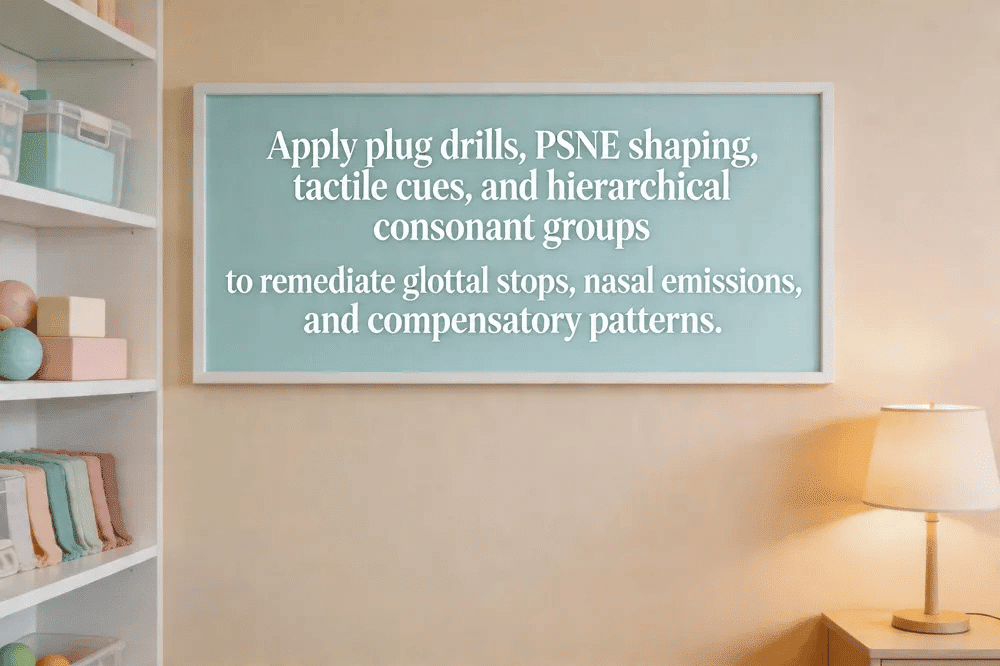
Nasal occlusion and plug drills: For children with velopharyngeal insufficiency or mislearning, a nose plug or listening tube is placed while practicing oral stops (e.g., /p, t, k/). The plug blocks nasal airflow, allowing oral pressure and auditory feedback through the Oral‑Nasal Listener (ONL) or a straw. Sessions are short (5‑10 min) and frequent.
Phoneme‑specific nasal emission (PSNE) shaping: Begin with a loud alveolar stop (/t/) and add the target fricative while keeping tongue‑tip placement. Straw or cupping gives real‑time feedback; the child practices /s/ and /ʃ/ with nostrils open then closed, reducing emission.
Compensatory articulation remediation: Glottal stops, pharyngeal fricatives and palatal stops are treated with tactile cues (tongue blade, hand on throat) and feedback. The therapist models oral placement; the child repeats with mirrors or the ONL.
Adult hypernasality exercises: Adults use “ah” and “ah‑ah‑ah” drills while monitoring nasal emission with a tube or nasometer. Tactile and cues help achieve oral resonance. Programs (e.g., 16 sessions over four weeks) are before surgical referral.
Addressing Compensatory Articulations and Complex Cleft Presentations
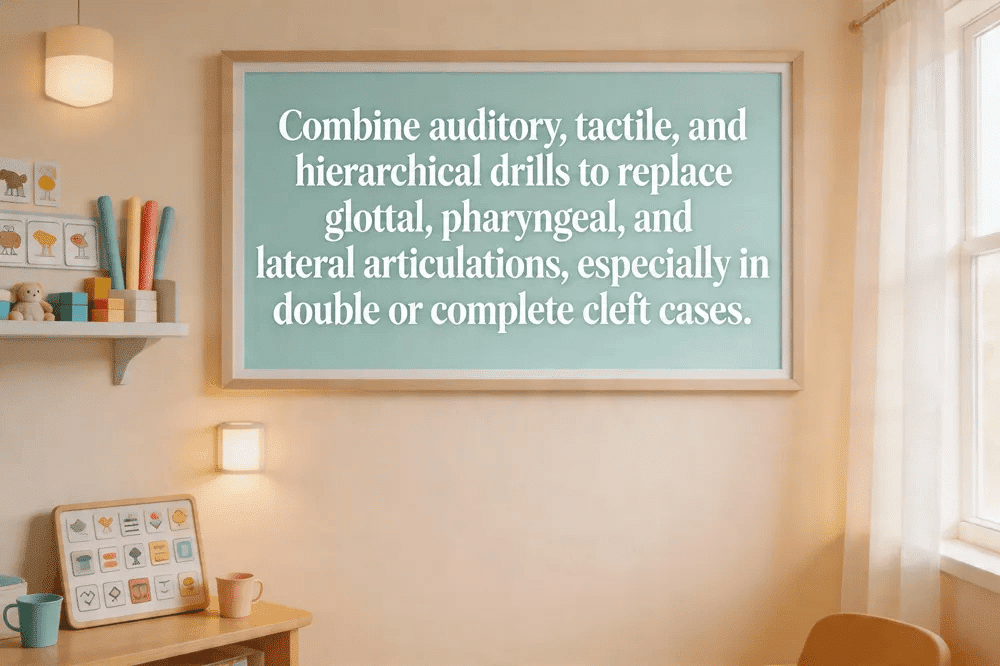
Compensatory articulation errors such as glottal stops, pharyngeal stops, and lateral lisps are common in children with cleft‑related velopharyngeal dysfunction. Evidence‑based speech‑language therapy uses auditory feedback (e.g., Oral & Nasal Listener, straw or tube techniques, tactile cues, and hierarchical drills (Group 1 / p‑t‑k/, Group 2 / b‑d‑g/, Group 3 / f‑s‑ʃ‑ʧ‑ʤ/ to replace these maladaptive patterns with correct oral placement and oral pressure.
Double cleft palate(bilateral cleft palate) creates two separate openings in the hard and soft palate, leading to feeding challenges, nasal‑sounding voice, and increased ear‑infection risk. Early surgical repair (usually before 12 months) followed by short, frequent therapy sessions—emphasizing oral consonant production and parent‑mediated home practice—optimizes speech and swallowing outcomes.Complete cleft lip and palate involves the entire lip, gum line, and palate, often requiring staged surgeries. Multidisciplinary care (surgeon, orthodontist, audiologist, SLP) addresses feeding, hearing, and speech. Early initiation of therapy (within the first months of life) and ongoing mastery of pressure consonants and resonance control help most children achieve intelligible speech by age five.
Overall, the goal is normal speech and resonance and not merely acceptable speech, achieved through motor‑learning principles, immediate feedback, and coordination with the craniofacial team.
Long‑Term Outcomes, Prognosis, and Community Resources
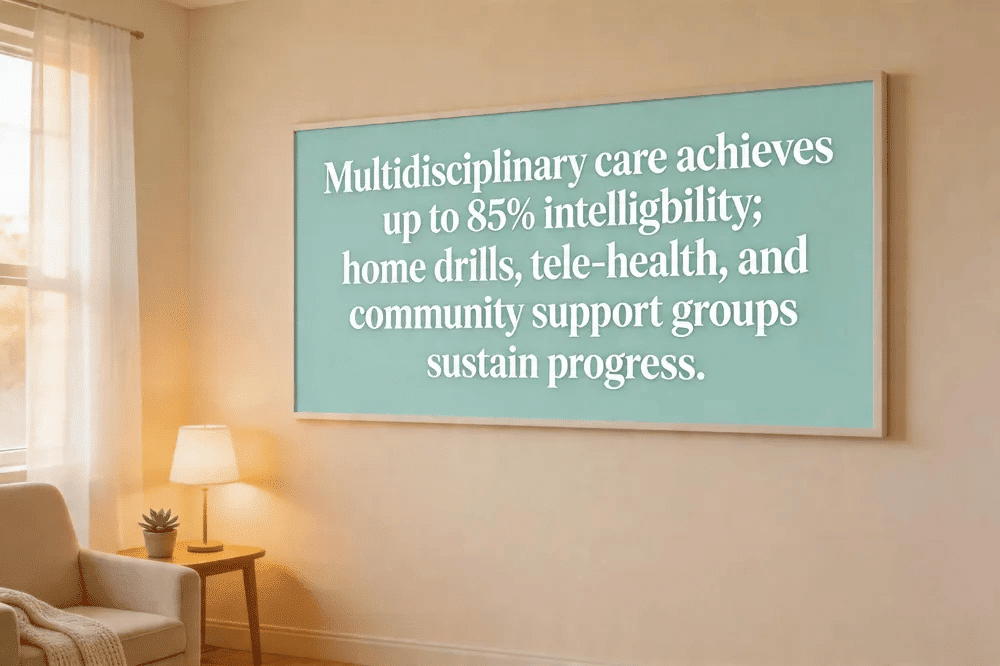
Multidisciplinary teams enable speech in up to 85 % of repaired cleft palate children, many reaching age‑appropriate intelligibility by school. Fifteen‑minute home drills with mirrors, straw feedback, or the Oral & Nasal Listener boost motor learning; tele‑health offers the same cues for families. In Oklahoma City, Pediatric Communication Solutions provides cleft‑palate therapy, coordinating with OU Health’s craniofacial team and offering clinic and virtual sessions. Palate Support Group meets monthly to share resources.
Cleft palate speech delay: Children with a cleft palate have delayed speech because the soft palate cannot close, causing hypernasality and compensatory errors. Early SLP evaluation around 18‑24 months guides therapy that teaches correct oral placement and surgery.
Speech therapy techniques for kids: Modeling, expectant waiting, and interactive games (e.g., “Simon Says”) are combined with drills (mirrors, straw). Parents reinforce learning with naming tasks and short practice.
Speech therapy for cleft palate near me: Pediatric Communication Solutions in Oklahoma City offers SLP services, kits, tele‑practice. Call (405) 555‑1234 or visit pcs‑ok.com.
Conclusion
Evidence‑based therapy for cleft‑palate speech focuses on correcting compensatory articulation errors and hypernasality through auditory feedback (nose plug, listening tube, Oral & Nasal Listener), visual and tactile cues, and systematic consonant drills (Group 1 p t k, Group 2 b d g, Group 3 f s ʃ ʧ ʤ). Motor‑learning principles—short, frequent practice, immediate feedback, and avoidance of non‑specific oral‑motor exercises—drive rapid progress. Early intervention, ideally before age 3, combined with surgical repair or prosthetic management when needed, yields the best long‑term outcomes. A multidisciplinary cleft team—surgeon, orthodontist, audiologist, and SLP—ensures coordinated assessment and treatment. Families in Oklahoma City should contact Pediatric Communication Solutions or the OU Health cleft palate team to begin personalized, evidence‑based speech care today for your child’s communication success and lifelong confidence. Our team is ready to support you every step of the way.