How Child Communication Therapy Enhances Social Skills
Understanding the Power of Child Communication Therapy
Child communication therapy is a specialized, evidence‑based service delivered by licensed speech‑language pathologists that targets both verbal and non‑verbal skills. Therapists use play‑based activities, role‑playing, social stories and visual supports to teach turn‑taking, eye contact, facial expression recognition and conversational flow. Strong social skills are essential for peer interaction, emotional regulation, classroom participation and long‑term academic success; children who struggle socially often experience frustration, low self‑esteem and isolation. By weaving articulation, language comprehension, pragmatic language and coordinated play into each session, therapy creates a low‑pressure environment where children can rehearse real‑world interactions. Parents, teachers and medical specialists collaborate to reinforce these skills at home and school, ensuring the gains generalize beyond the clinic.
Social Skills For Kids – Ways To Improve Social Skills For …
Why Speech Therapy Matters for Social Development
Why is speech therapy important for kids? Speech therapy builds the speech and language foundations children need to be understood and to understand others, reducing frustration and boosting self‑esteem. Play‑based, individualized activities teach vocabulary, grammar, and social‑pragmatic cues, supporting reading, writing, and classroom participation.Can speech therapy help with social skills? Absolutely. Beyond articulation, therapists teach turn‑taking, eye contact, and non‑verbal cues using role‑play, video modeling, and interactive games. These evidence‑based techniques increase confidence, lower anxiety, and foster stronger peer relationships.Social speech Vygotsky Vygotsky emphasized that speech originates socially and becomes a tool for thought. Through guided participation within the Zone of Proximal Development, children internalize conversational rules, later using private speech to plan and self‑regulate. Pediatric therapists apply this by providing scaffolded, collaborative dialogues that promote both expressive and receptive language growth.What are the benefits of communication for children? Effective communication nurtures self‑esteem, emotional connections, and problem‑solving skills. It enhances academic learning, conflict resolution, and overall emotional resilience, laying a lifelong foundation for healthy social, emotional, and cognitive development.
Identifying the Need for Speech Therapy
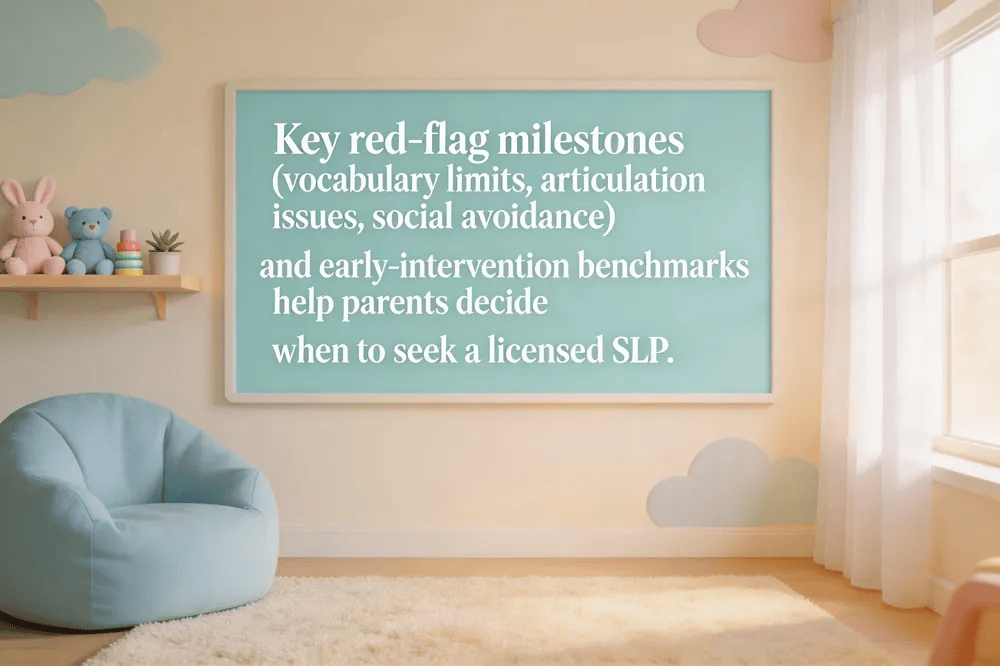
Red‑flag milestones and self‑check quizzes help parents decide when to seek professional evaluation. Key warning signs include limited vocabulary, difficulty combining words, poor articulation that strangers can’t understand, and avoidance of peer interaction. For ages 2‑7, the National Institute on Deafness and Other Communication Disorders notes that children should meet specific language benchmarks (e.g., 50 words by age 2, 200‑word vocabulary by age 3, 1,000‑word vocabulary and multi‑word sentences by age 4). If a child falls short of two or more of these milestones, a quick online quiz or a free screening through Oklahoma City’s Early Intervention Program can confirm the need for a licensed speech‑language pathologist. Early intervention—often before age 5—maximizes neuroplasticity, improves social‑communication skills, and reduces frustration, setting the stage for academic success and healthier peer relationships.
Local Services in Oklahoma City and Edmond
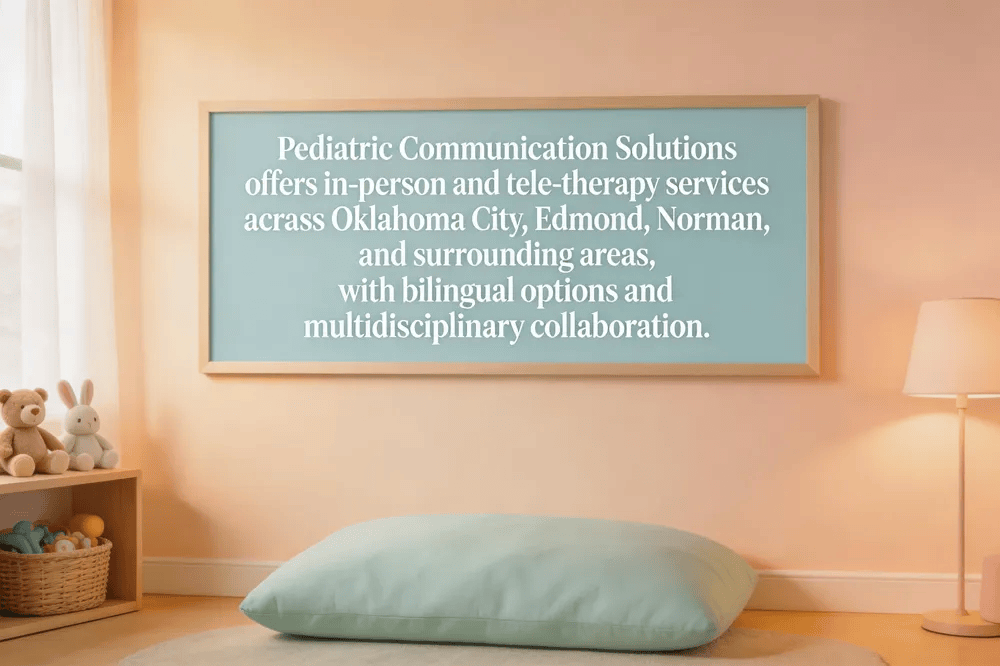
Pediatric Communication Solutions (PCS) serves Oklahoma City, Edmond, Norman and surrounding communities. In Edmond, PCS offers family‑centered speech‑language therapy at 209 Lilac Drive, Suite 130, providing individualized programs for articulation, language, fluency, feeding and social‑communication skills. Parents seeking “speech therapy near me” can access PCS’s in‑person and tele‑therapy options, as well as services at Children’s Hospital OKC and other private practices in Norman, Bethany and the wider metro area. In Norman, PCS delivers comprehensive evaluation and treatment for articulation, language development, social communication and augmentative/alternative communication, with bilingual (English/Spanish) options and coordination with medical specialists. PCS also extends its expertise to adults, offering voice, fluency, cognitive‑communication and dysphagia therapy through evidence‑based programs and telehealth. Across the region, PCS’s licensed SLPs collaborate with occupational and physical therapists, ensuring a multidisciplinary approach that supports each child’s ( developmental milestones.
Social‑Skills Group Therapy and Activities
Group therapy formats in Oklahoma City, such as the weekly social‑skills cohorts offered by Pediatric Communication Solutions, bring together 3‑12‑year‑olds and teens for structured play‑based sessions led by licensed SLPs. Evidence‑based activities include role‑play greetings, conversation circles, emotion‑matching cards, cooperative board games, and video self‑monitoring, all designed to teach turn‑taking, eye contact, and perspective‑taking.
Social skills therapy near me– Local clinics provide 1‑hour weekly groups, a 12‑week commitment, and flexible enrollment; families can also access community programs like the Center for Social Success.Social skills Speech therapy activities– Structured play (e.g., “Simon Says,” scavenger hunts), social stories, feeling‑face worksheets, and joint‑attention exercises reinforce pragmatic language in a fun, low‑pressure environment.Social situations speech therapy– Therapists rehearse real‑world scenarios such as ordering food or joining a game, using visual cue cards and immediate feedback to build functional communication.How to target social skills in speech therapy?– Therapists teach pragmatic rules, model them via video and role‑play, provide peer‑interaction games, and use visual supports and home‑practice assignments for generalization.Social skills for preschool – Simple games (Red Light, Green Light), puppet emotion charades, and storytime role‑play develop sharing, turn‑taking, and empathy, laying a foundation for school success.
Evidence‑Based Approaches and Research Findings
Research from the University of Oklahoma indicates that children who participate in structured group therapy show a 30% increase in peer interaction quality within six months.
A meta‑analysis of early communication‑language therapy interventions reports a modest but statistically significant improvement in social communication for young children with autism spectrum disorder (ASD), with an aggregated effect size of Hedges’ g = 0.355 (95% CI [0.207–0.503]).
A 2021 systematic review found that pediatric speech‑language interventions that incorporate play‑based activities lead to higher engagement and better generalization of social skills to classroom and home environments.
Social skills groups in therapy boost confidence and reduce classroom social anxiety.
Achieving age‑appropriate communication milestones by age 5 reduces risk of peer‑relationship problems and academic underachievement.
ASHA recommends collaboration among SLPs, educators, and medical specialists to create individualized plans targeting language and social skill goals.
Additionally, research from the University of Oklahoma Health Sciences Center indicates that children who receive speech‑therapy interventions before age five show a 30‑40% greater improvement in social communication skills compared to those who start later.
Early speech‑language therapy for ages 0‑5 improves receptive and expressive language skills, foundational for peer interactions.
Supporting Therapy at Home and Community Resources
Parent‑mediated strategies are a cornerstone of successful pediatric speech‑language therapy. When caregivers are trained to model and reinforce communication techniques, children show increased functional communication and reduced frustration. Families are encouraged to use social‑skill kits, storybooks, video modeling, and digital apps at home to maximize generalization of therapy goals.
Playdates and social stories provide natural, low‑pressure settings for practicing turn‑taking, eye contact, and emotional regulation. Oklahoma City pediatric therapy centers frequently incorporate cooperative games and role‑play, activities that have been proven to boost peer interaction and self‑esteem.
Community workshops and grants expand these opportunities. The Oklahoma Department of Mental Health funds community‑based social‑skill workshops for children with autism, while local schools partner with pediatric clinics to embed social‑skill groups into the school day, meeting state special‑education mandates. Pediatric Communication Solutions offers a multidisciplinary clinic that combines speech‑language pathology, occupational therapy, and behavioral counseling for comprehensive support. Progress is tracked through regular observations and assessments, allowing therapists to tailor interventions as each child’s needs evolve.
Special Considerations for Autism and Other Conditions
In Oklahoma City, over 200 licensed SLPs—such as those at Pediatric Communication Solutions—provide autism‑focused interventions that blend play‑based activities with evidence‑based pragmatic language training. Speech‑therapy tools for autism include visual schedules, picture‑communication boards, and AAC devices like Proloquo2Go, which help children request needs and practice expressive language. Sensory‑friendly oral‑motor tools (e.g., ARK Probe, Bite Blocks) support articulation while social‑story books and choice‑board worksheets reinforce perspective‑taking.Social skills therapy near me is offered through weekly group sessions that teach turn‑taking, eye contact, and conversation strategies through cooperative games, role‑play, and video self‑monitoring; enrollment is flexible for ages 2‑12 and teens.Social speech Vygotsky reminds us that language develops first as a social tool; therapists scaffold interaction within the Zone of Proximal Development, turning guided dialogue into private speech that regulates behavior.Speech therapy for social skills targets both verbal and non‑verbal cues, using emotion‑matching cards, joint‑attention activities, and structured peer‑mediated games to build empathy and confidence.Social‑skills speech‑therapy activities—conversation circles, turn‑taking drills, and social‑story role‑play—provide safe, repetitive practice that translates to real‑world peer interactions, supporting long‑term social competence.
Putting It All Together for Your Child’s Future
Therapy gives children a solid foundation for communication and social interaction. Key takeaways include improved articulation, turn‑taking, eye contact, and emotional regulation, all of which boost confidence and peer engagement. For families, the next steps are to obtain a pediatric referral, schedule an evaluation with a licensed speech‑language pathologist, and explore community‑based social‑skill groups or play‑based sessions offered by Oklahoma City clinics and schools. Consistent practice at home—using social stories, role‑play, and printable games—reinforces gains. Early intervention yields long‑term benefits: higher self‑esteem, stronger friendships, better academic performance, and reduced anxiety that can last into adolescence and adulthood. Progress monitoring through assessments, collaboration with teachers for classroom integration, and video‑modeling apps help ensure skill transfer across settings and sustain growth.