
How Parents Can Create a Speech‑Rich Environment for Toddlers

The Power of Intentional Interaction
Defining a Speech-Rich Environment
A speech-rich environment transforms everyday interactions into natural language-learning opportunities. It is not about formal lessons but about weaving narration, songs, and word games into daily routines. When a caregiver narrates chopping carrots for dinner or sings a silly song during bath time, they create a dynamic, engaging space where words come alive.
Responsive Communication in Action
At its core, a speech-rich environment is built on responsive communication. This means caregivers actively model rich vocabulary, describe their own actions and the child’s feelings, and build on a toddler’s gestures or sounds. For example, when a toddler points, the adult names the object; when a child says “Two cat,” the adult expands it to “Yes, you have two cats on your shirt!” This demonstrates how to extend language without correction.
Creating a Calm and Engaging Space
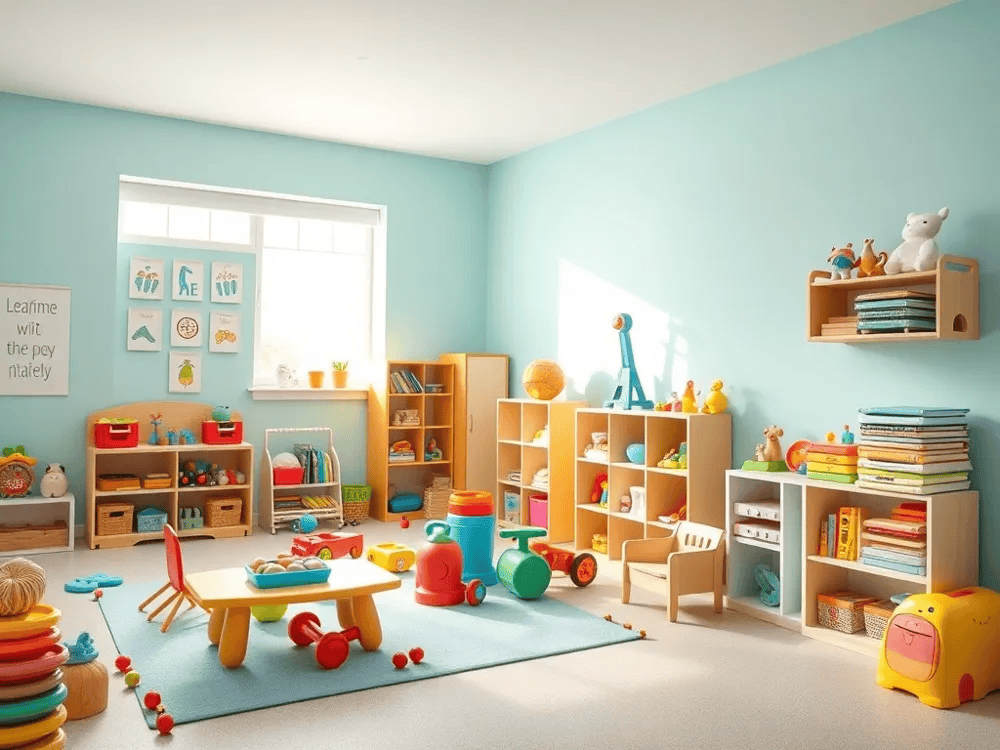
Equally important is the physical and emotional atmosphere. Reducing background noise—like turning off the TV—helps the child focus on the speaker’s voice. Following the child’s lead, rather than directing play, respects their interests and fosters a calm, respectful space. This approach encourages the child to initiate communication, making language development a shared, positive experience. A prepared environment, with books at eye level and toys within reach, supports this independent exploration. By prioritizing these elements, caregivers create a nurturing foundation for strong communication skills.
| Strategy | How to Implement | Goal |
| Narrate daily actions | Describe what you are doing, e.g., “I’m pouring milk.” | Introduce words in context |
| Respond to gestures | Name the object a child points to while looking at it | Build vocabulary |
| Expand on sounds/words | Add one word to child’s utterance, e.g., “cookie” → “more cookie” | Model longer sentences |
| Reduce background noise | Turn off TV during playtime | Improve focus on speech |
| Follow the child’s lead | Join in their chosen toy or activity | Encourage initiations |
Creating a Language-Rich Environment
The Everyday Speech-Rich Environment: A Foundation for Learning
What is a language-rich environment for toddlers?
A language-rich environment is a space where everyday routines like mealtime, dressing, and play become natural opportunities for learning. Caregivers model rich vocabulary, describe actions and feelings, and respond to a toddler’s gestures or sounds by expanding on them. This environment is interactive and child-led—adults follow the toddler’s interests while gently introducing new words and grammatical structures. It includes back-and-forth “conversations” even if the child only babbles, and it relies on positive, responsive interaction rather than drills or testing.
How can parents create a speech-rich environment for toddlers at home?
Start by narrating daily activities: talk about what you are doing and what will happen next. Use simple signs or gestures along with words, such as tapping your lips when saying “time to eat.” Sing songs and read board books together, letting the toddler handle the book and choose when to turn the page. Expand on your child’s short phrases—for example, if they say “two cat,” respond with “Yes, you have two cats on your shirt!” This models longer, grammatically correct sentences without correction. Reduce background noise and follow the 3:1 rule: make three comments for every one question you ask. This lowers pressure and keeps language playful. Finally, pause and wait up to five seconds for your toddler to respond, giving them time to process and take their turn.
Foundations of a Literacy-Rich Space
A language- and literacy-rich environment for infants and toddlers is built on responsive, back-and-forth conversations during everyday routines. When caregivers describe actions (“Now we’re putting on socks”), expand on the child’s utterances (“Yes, a big red car”), and sing songs with gestures, they model vocabulary and sentence structure in a natural, low-stress way.
Key Characteristics
Daily interactive reading is essential—offer sturdy board books, point to pictures and printed words, and let the child choose when to turn pages. Display simple labels on household objects (e.g., “door,” “chair”) at the child’s eye level to connect spoken and written language. A calm, uncluttered space with a cozy reading nook and accessible books encourages focused joint attention.
Open-ended toys like blocks, dolls, and pretend food prompt imaginative play and storytelling. Caregivers can join the play, labeling actions and feelings (“You’re feeding the bear”). Avoid overstimulation: limit background noise and screen time so children can hear and respond to language clearly.
Above all, the environment should feel joyful and unhurried. Responsive adults who follow the child’s lead, wait for their turn, and praise every communication attempt create the foundation for lifelong literacy and language success.
These practices reflect research showing that early literacy begins in infancy and that playful, literacy-rich settings help children understand the functions of oral and written language, setting a foundation for later reading success.
Playful Activities That Build Vocabulary

What are some language-rich activities for toddlers?
You can build a toddler’s vocabulary through playful, everyday interactions like dialogic reading, where you ask open-ended questions and make predictions during story time. This approach encourages children to become active storytellers, expanding their comprehension and expressive language.
Narrating daily routines—such as describing actions while cooking or dressing—using rich, descriptive vocabulary integrates language learning naturally. Singing repetitive songs with accompanying gestures and playing word games like rhyming or alliteration further supports phonological awareness and memory.
Engaging in pretend play that invites descriptive language, and repeating stories and vocabulary across different contexts like play and book sharing, reinforces learning. Being responsive to a child’s attempts to communicate, even if unclear, extends their language skills by meeting them at their developmental level, fostering both cognitive and social growth.
What is the 3:1 rule in speech therapy?
The 3:1 rule is a powerful communication strategy where you make three comments or statements for every one question you ask a child. This approach models new vocabulary and language structures while significantly reducing the pressure on the child to perform. By asking fewer direct questions, children feel less like they are being interviewed and are more motivated to use language spontaneously.
For example, during play with a dollhouse, you might comment “Wow, look at the house!” and “Let’s open the door” three times before asking one question like “What color is her dress?” This technique encourages natural, back-and-forth conversation, making it a valuable tool for parents and therapists to foster organic language development in everyday interactions.
Supporting a Child with Speech Delays at Home
How can parents help a child with speech delay at home?
Parents are a child’s most important communication partners. Research shows that when equipped with practical strategies, caregivers can be as effective as speech-language pathologists in supporting language development. The key is to embed language-building opportunities into everyday routines without pressure.
Model clear speech and simple sounds. Exaggerate sounds like “ma,” “da,” and “ba” during play, and encourage your child to imitate them. Use self-talk (narrating your own actions: “Now I’m washing the cup”) and parallel talk (describing what your child is doing: “You’re pushing the truck”). These techniques naturally model vocabulary and sentence structure.Offer choices to prompt responses. Hold up two items and ask, “Do you want an apple or an orange?” This gives your child a reason to use words without feeling tested.Expand on their utterances—if your child says “cookie,” respond with “You want a cookie? Here’s a round cookie.” This models longer sentences without correction.
Read together daily. Use sturdy books with bright pictures. Talk about the pictures, ask open-ended questions (“Where is the dog?”), and pause to let your child fill in familiar words.Respond immediately to any communication attempt—a point, a sound, or a gesture—to reinforce that their message matters.
Keep activities fun and follow your child’s lead. Avoid drilling or repeated testing. If you have concerns, consult a speech-language pathologist for personalized guidance.
Expert Help: How Pediatric Communication Solutions Can Guide You
How does Pediatric Communication Solutions help children with speech and language needs?
Pediatric Communication Solutions provides comprehensive and innovative speech, language, and reading therapy. Licensed speech-language pathologists tailor each plan to the child’s unique abilities and challenges. The goal is to help children find their voices and reach their highest academic potential through engaging, one-on-one sessions.
Caregiver participation is encouraged, and therapy is offered both in-person and through teletherapy to fit family schedules. Outpatient sessions are typically scheduled once a week or less, ensuring consistent support without overwhelming the child.
What speech therapy services are available for children in Oklahoma City?
Families in Oklahoma City have access to several specialized pediatric therapy providers:
| Provider | Services Offered | Key Features |
| Speech Pathway | Speech and language disorders, summer programs, group sessions | Birth to adolescence; family-centered approach |
| OKC Speech | Speech, occupational, feeding, and physical therapy | Supportive environment; addresses oral-motor skills |
| Oklahoma Pediatric Therapy Center (OPTC) | Speech therapy, behavioral therapy, teletherapy | Multidisciplinary care for comprehensive support |
These clinics provide individualized therapy for speech delays, language disorders, feeding difficulties, and learning challenges. Teletherapy options help ensure accessibility for families across the region.
Milestones, Early Intervention & Additional Resources
What can parents do to promote speech development in infants (0-12 months)?
From birth, parents can lay the foundation for language by talking to their baby frequently. Narrate daily routines like bath time and dressing, use simple words with clear gestures, and describe what you see and do. Copying the baby’s coos and babbles and taking turns in back-and-forth “conversations” shows them that communication is a two-way street.
Playful interactions are also powerful. Games like peek-a-boo, singing simple songs, and pointing to pictures in sturdy board books build listening skills and vocabulary. Most importantly, respond warmly to all of the baby’s vocalizations. This positive reinforcement encourages them to keep trying, building confidence and a love for communication.
What strategies support language development in early childhood?
Around age 1 to 3, language blossoms. Parents can support this growth by following the child’s lead, commenting on their play, and expanding on their short phrases. For example, if a child says “dog run,” you can say, “Yes, the big dog is running fast!” Using open-ended questions like “What do you think will happen next?” encourages longer thinking and sentences.
Maintaining several turns in a conversation, using self-talk (“I’m peeling the banana”), and incorporating verbal routines (“Ready, set, go!”) build vocabulary and conversational skills. The goal is to make language a natural, enjoyable part of the day, not a test. These evidence-based strategies help bridge the word gap and foster confident communicators.
What are the typical language development milestones for infants (0-12 months) and toddlers (1-3 years)?
Milestones are general guidelines; children develop at their own pace. For infants, expect cooing at 3 months, babbling like “ba-ba” at 6 months, and first words around 12 months. They also begin to understand simple commands, respond to their name, and recognize familiar voices. A language-rich environment with talk, books, and responsive interactions supports this progress.
For toddlers (1-3 years), milestones include using 10-15 words by 18 months, combining two words (“more milk”) by 24 months, and having a vocabulary of 50+ words by age 2. They also follow simple directions, understand simple questions, and are understood by caregivers about half the time. By age 3, they use 200-300 words, speak in three-word phrases, and can tell simple stories.
Where can I find free PDF resources for child speech therapy activities?
Many trusted organizations offer free, high-quality PDF handouts for parents. The American Speech-Language-Hearing Association (ASHA) provides free, printable tip sheets on its public website. The Child Mind Institute and the Hanen Centre also offer downloadable PDFs with simple, research-backed activities for boosting speech and language at home.
Additionally, many pediatric speech-language therapy providers, such as Oklahoma Pediatric Therapy Center and local university clinics (e.g., OU Health), share free resources and guidance on their websites. Simply search for “free speech therapy activities for toddlers PDF” to find materials from these professional sources, which often focus on everyday routines like mealtime, play, and reading.
What is early intervention for speech and language, and how can parents access handouts?
Early Intervention (EI) is a system of services for infants and toddlers (typically birth to age 3) who show signs of a delay in development, including communication. It’s based on the understanding that the early years are critical for brain development, and that intervening early can significantly improve a child’s trajectory. Services are often family-centered, with a provider coaching parents to build skills during everyday routines.
To access EI, parents can start by contacting their state’s Early Intervention program — in Oklahoma, this is SoonerStart. They can also download free handouts from ASHA, the CDC’s “Learn the Signs. Act Early” program, and pediatric therapy center websites. These handouts often list milestone checklists and simple, play-based activities that support speech and language development before formal therapy begins. If you have concerns, a free evaluation through your state’s EI program is a great first step.
Your Role as a Communication Partner
Trust Your Role as Your Child’s First Teacher
You are your toddler’s most important communication partner. Every moment—from diaper changes to mealtime—is a chance to build language through responsive, joyful interaction. Research confirms that when parents are equipped with simple tools like following the child’s lead, narrating daily routines, and expanding their child’s words, they can be as effective as professionals in boosting speech development. There is no need for special equipment or perfect execution; what matters most is being present and engaged.
Follow Their Lead, Trust Your Instincts
Language grows best when you tune into what your child finds interesting. Get down to their eye level, wait for them to take a turn, and comment on their play rather than quizzing them. If your toddler points to a bird, name it and describe what it does. If they say “two cat,” simply say back, “Yes, two cats are eating!” These natural expansions and back-and-forth exchanges are far more powerful than formal drills. Trust your instincts: you already know how to talk with your child. And if concerns arise—such as a limited vocabulary or difficulty following directions—seeking guidance from a licensed speech-language pathologist, like the team at Pediatric Communication Solutions, can provide personalized strategies that fit your family’s routine.
Connection Over Perfection
Creating a speech-rich environment is not about hitting milestones on a strict timeline. It is about making language feel fun, safe, and woven into the fabric of daily life. Celebrate every word, gesture, and sound your child makes. When you respond with warmth and patience—without pressure to perform—you are building the neural pathways that support lifelong communication. Remember, the goal is not perfection but connection. With consistent, loving interaction and professional support when needed, you are already giving your child the most powerful start possible.