
How to Support Speech Development at Home: Effective Activities
Why Home Practice Matters
Early language milestones in the United States—such as babbling by 6‑12 months, first words around 12 months, a 50‑word vocab by age 2, and simple sentences by age 3—set the foundation for later academic and social success. Research from ASHA and pediatric speech‑language experts shows that a language‑rich environment at home accelerates these milestones. When caregivers narrate daily routines, label objects, and expand on a child’s utterances, children receive repeated exposure to new vocabulary, sentence structures, and sound patterns. Parents are the primary language models; their consistent, clear speech, rhythmic singing, and responsive turn‑taking teach turn‑based conversation, phonological awareness, and expressive confidence. By weaving practice into everyday activities—mealtime chats, bedtime reading, and playtime dialogue—families create natural “communication temptations” that reinforce therapy goals, promote generalization, and reduce the need for intensive clinical hours. Consistent, compassionate home practice therefore becomes a powerful lever for optimal speech, language, and literacy development.

How to do speech therapy activities at home [3 examples with …
Daily Narration, Modeling, and Expansion
Narrating everyday routines—what you’re doing while dressing, cooking, or cleaning—pairs words with actions and builds a child’s contextual vocabulary. When a child uses a word, expand it by adding a descriptor or a phrase (e.g., “ball” → “big red ball”) to model longer utterances and reinforce grammar. Sprinkle open‑ended questions (“What do you think will happen next?” or “How does the soup taste?”) throughout play and meals, then pause to give the child time to respond, encouraging turn‑taking and conversational flow.
How to help a child with speech delay at home: Talk frequently, narrate activities, play turn‑taking games like peek‑a‑boo, expand the child’s words, ask open‑ended prompts, sing songs, and read picture books together. If progress stalls, schedule an evaluation with a licensed speech‑language pathologist.
What qualifies a child for speech therapy: Persistent delays such as fewer than 20 words by age 2, no two‑word phrases by age 3, frequent articulation errors, difficulty following directions, limited turn‑taking, or frustration when communicating are red flags. Early referral—ideally before age 3—maximizes successful outcomes.
Interactive Games and Play‑Based Practice

Effective speech‑development games online blend fun with targeted practice, keeping kids motivated while they work on articulation, vocabulary, and language concepts. Platforms such as ABCYa, Language Playroom, and printable puzzles from Highlights Kids offer age‑appropriate activities that reinforce phonemic awareness, categorization, and sentence structure. For preschoolers, playful tasks like a “Scavenger Hunt” for target sounds, board games (Barnyard Bingo, Candyland, Hi Ho Cherry‑O), and interactive storytelling tools (story dice, picture cards, Guess Who?) encourage turn‑taking and multi‑step directions in preschoolers. Toddlers benefit from simple, hands‑on games: searching for objects that start with a specific sound, building with blocks or stacking cups while labeling colors, numbers, and verbs, and role‑play dress‑up scenarios that prompt new vocabulary and sentence building. Integrating these games into daily routines—mealtime chats, bath‑time narration, or music‑and‑rhyme sessions—creates natural, low‑pressure opportunities for speech practice that align with evidence‑based recommendations from ASHA and pediatric speech‑language specialists.
Reading, Songs, and Rhymes as Language Builders
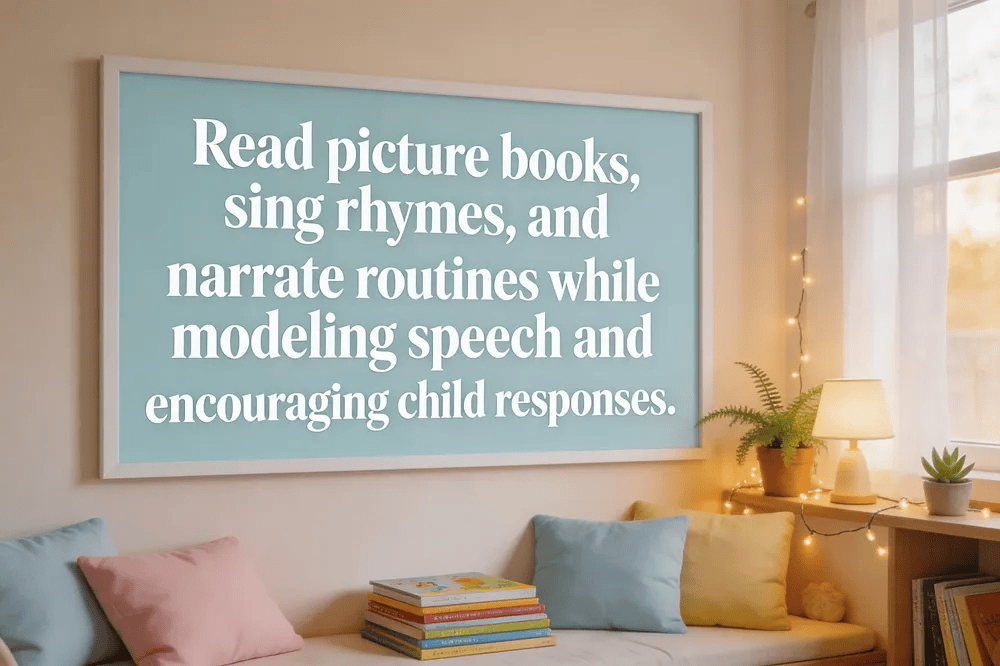
Reading together daily expands vocabulary and sentence structure. Choose picture‑rich books, point to objects, and pause to ask open‑ended questions (“What’s this?”). Modeling clear speech, expanding the child’s utterance (e.g., “Mama—here’s Mama, she loves you”), and giving ample response time reinforce vocabulary and sentence structure.
Singing songs and nursery rhymes reinforces rhythm and sound patterns for speech. Sing familiar songs, use hand‑plays, and emphasize sound patterns (“The dog says woof‑woof”). The predictable cadence helps children anticipate and produce new sounds while enjoying a fun, low‑pressure context.
Narrating daily routines provides contextual vocabulary and descriptive language. Label colors, shapes, textures, and sensory descriptors during reading, and encourage the child to describe pictures or retell simple stories.
What activities help speech development? Playtime conversations and pretend play encourage open‑ended questions and turn‑taking. shared reading with questions, and singing nursery rhymes all link words to actions, model turn‑taking, and build confidence.Free speech development activities for toddlers Reading together daily expands vocabulary and sentence structure. singing songs with gestures, peek‑a‑boo, clapping games, narrating routines, and a picture‑matching board that encourages naming and categorizing.Language development activities for 1‑2‑year‑olds Narrating daily routines provides contextual vocabulary and descriptive language. use turn‑taking games, repeat and expand child utterances, explore bright picture books, and incorporate animal‑sound songs for rhythmic vocabulary practice.
Printable PDFs and Resource Libraries

Parents can easily access free, evidence‑based PDFs to reinforce speech‑language goals at home. For toddlers, printable activity packets such as the Deana Kahlenberg “Play‑Based Speech‑Therapy Homework” (bubbles, books, puzzles) and age‑specific guides from Texas Children’s Health Plan offer vowel‑like sounds, finger games, and simple questions to expand vocabulary. A Speech‑and‑Language Development PDF outlines typical milestones, includes checklists, and distinguishes speech from language disorders—ideal for tracking progress and spotting red flags. To support daily practice, download PDFs that combine interactive games (I Spy, scavenger hunts), sing‑along rhymes, and picture‑sorting tasks; these resources teach turn‑taking, sequencing, and descriptive language. Free libraries such as FreeLanguageStuff.com, SpeechLanguage‑Resources.com, and the Pediatric Communication Solutions resource hub provide ready‑to‑print worksheets, cue cards, and tailored activity lists for 3‑5‑year‑olds and older children. Ask your child’s SLP for a personalized PDF program and use the downloadable guides to create a language‑rich routine at home.
When to Seek Professional Evaluation

Red‑flag signs that merit an early referral include limited vocabulary (fewer than 50 words by age 2), unintelligible speech beyond age 4, difficulty following simple directions, lack of eye contact or response to name, and frustration when trying to communicate. When these cues appear, a licensed speech‑language pathologist (SLP) should assess the child promptly. According to the American Speech‑Language‑Hearing Association (ASHA), speech therapy is the evaluation, diagnosis, and treatment of communication and swallowing disorders by qualified SLPs, targeting articulation, voice, fluency, language, social communication, and feeding. A core therapeutic strategy is the 3 : 1 rule: for every question posed, the adult offers three modeling comments, providing rich language input while encouraging the child to respond. Additional evidence‑based strategies include narrating daily routines, expanding the child’s utterances (e.g., “Car” → “Yes, that’s a big red car”), using clear simple speech, and integrating turn‑taking games. These approaches, combined with professional guidance, support timely intervention and optimal speech‑language outcomes.
Putting It All Together: A Sample Home Routine
Morning routine: Start the day by narrating tasks—‘We are brushing teeth, the toothbrush is blue.’ Label objects, colors, and actions. Offer two choices (e.g., ‘apple or banana?’) and pause after each question so child can respond. Sing a song for rhythm.
Mid‑day play: Use puppets or pretend‑play toys to model sentences and expand child’s utterances (“Here is red ball”). Play games like “Simon Says” or “Name This Thing,” and ask yes‑no or choice questions. Rhythm and rhymes reinforce sound patterns.
Evening reading: Read a book together, point to images, and ask questions. After story, invite child to retell events, pausing for their response.
How to support speech and language in early years: Talk, label, sing, pause, expand—routine into interaction that builds vocabulary, conversation, confidence.
How to support speech development at home for toddlers: Narrate actions, read aloud with questions, play games, sing rhymes, provide play that builds description and sentence skills.
Your Path to Confident Communication
Consistent daily practice turns brief moments into powerful language learning. By weaving short, focused activities—such as naming objects while dressing, singing a favorite rhyme while cooking, or pausing after a question—parents provide the repetitions that research shows accelerate vocabulary growth and speech clarity. Partnering with Pediatric Communication Solutions amplifies these efforts. Their licensed speech‑language pathologists assess each child’s unique profile, suggest targeted home tasks, and offer video modeling or printable cue cards that fit seamlessly into family routines. Regular check‑ins keep goals aligned and allow therapists to adjust strategies as skills emerge. Celebrating milestones, big or small, reinforces confidence. A simple “I love how you said ‘more’” or a sticker for a new word creates positive feedback loops that motivate further attempts. Together, consistent practice, professional partnership, and joyful acknowledgment nurture a child’s path to confident communication through everyday interactions and supportive guidance together.